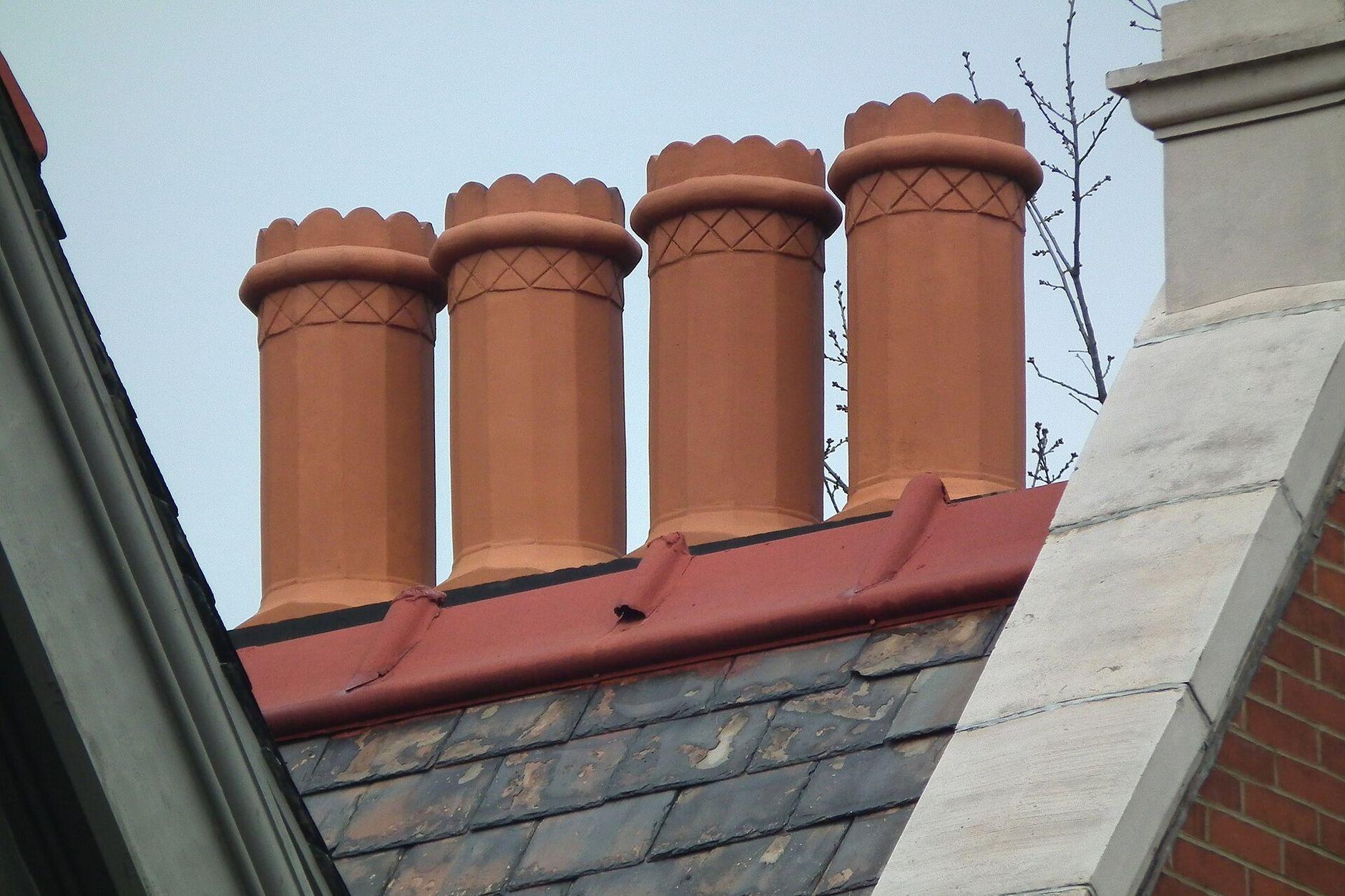

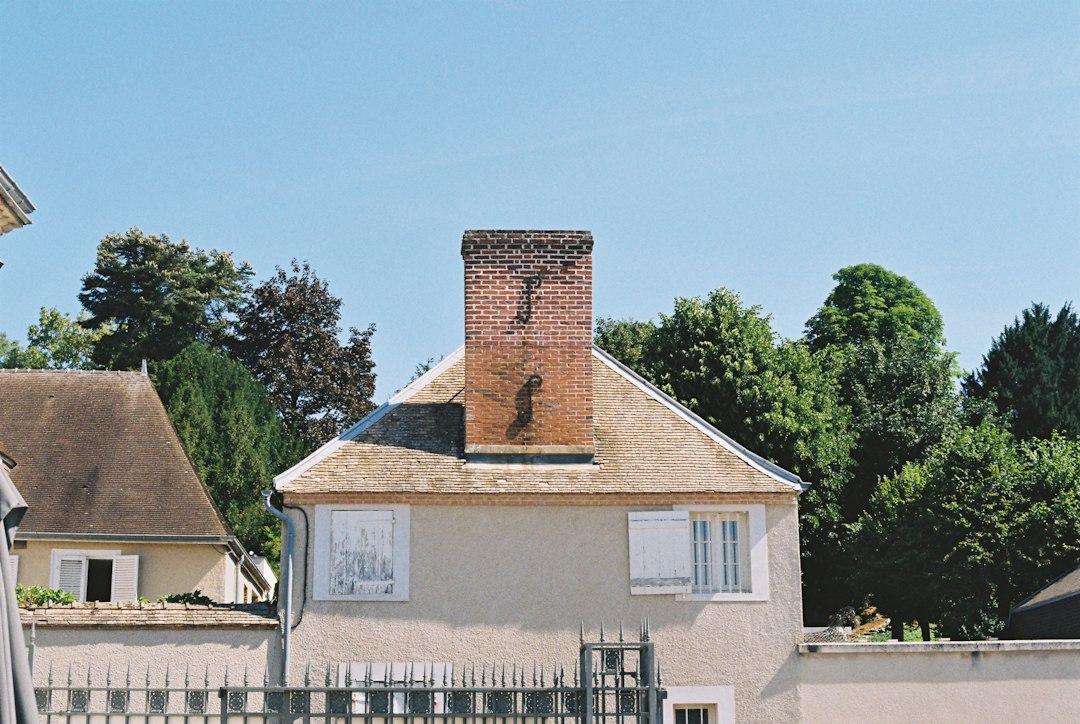
Up on the last course of brick sits the crown, a mortar or concrete lid the flue tile rises through. It sheds every storm that lands on the stack, so once it splits, rain gets into the brick from above, and every crack in the slab becomes a path into the stack. Crowns on houses in Hawaiian Gardens and the cities around it take full sun all summer and the first heavy rain each winter, which is a hard life for a thin slab of mortar. This post sets out how Audley Chimney Solutions prices crown work, so the written quote you get makes sense before you sign it.
Why crowns fail here
Most crowns we lift were never built as crowns. They are a wash of mortar troweled over the top course, thin at the edges and flush with the brick face. There is no overhang, so water runs straight down the outside of the stack. There is no gap between the slab and the flue tile, so when the tile grows with heat the slab cracks around it. And because mortar is the wrong material for a slab, it shrinks and splits within a few seasons.
Other causes we see often:
- Shaking. Quakes crack crowns along the line of the flue, and many stacks in this part of the county still carry cracks from 1987 or 1994.
- Salt air. Closer to Long Beach, salt in the marine air works into the slab and the top courses.
- Roof work. Crews walking the roof sometimes break crown edges or stand ladders against them.
- A missing cap. Water pooling on the crown around the flue speeds up every other cause.
The three crown jobs
Crown work comes in three sizes, and the right one depends on how much of the slab is still solid.
1. Sealing fine cracks. When the slab is sound and the cracks are thin, we clean them out and fill them with a crown sealant that stays flexible. This buys years on a good crown. It is not a fix for a slab that rocks or has pieces missing.
2. Resurfacing. When the surface has crazed and worn but the slab is still bonded to the brick, we grind back the loose skin and apply a thicker crown coating over the whole top. This is the middle job.
3. Recasting. When the slab is broken through, loose or was only a mortar wash to begin with, we break it off and cast a new one. We build a form that overhangs the brick on every side, cut a groove under the edge so water drops off before it can track back to the face, set a bond break against the flue tile so the two can move separately, and pour a concrete mix made for the job, sloped away from the flue.
What moves the price
Crown work is quoted in writing after we have been on the roof, because each of these changes the job:
- Size of the top. A single small flue and a wide stack with three flues are different pours.
- Which of the three jobs it is. Sealing is a small job; recasting means demolition, forming and curing.
- What sits under the slab. If the top courses are loose once the old crown is off, they are relaid first, and that goes on the quote as its own line.
- The cap. A new crown usually wants a cap. A fitted cap is quoted on site.
- Access. Height above the roof, pitch and roof type all change how long staging takes.
If the stack has been leaking, or the brick near the top looks soft, we usually suggest the camera inspection first ($395). It tells us whether water has already gone deeper than the crown, which changes the job from a crown repair to a crown plus a masonry repair. A plain look at the parts in view (Level 1) is $55 and is enough when the crown is the only question.
Ask for a written crown quote and tell us whether you can see cracks from the ground, whether there is a cap, and whether there has been water in the house near the chimney. Those three answers decide which of the three jobs we plan for.
Why we do not just patch over
The cheapest crown job anyone will offer is another layer of mortar on top of the old one. It looks clean for a season. Then the new layer cracks along the old cracks, because nothing underneath has changed, and the extra weight sits on brick that was already taking water. We will tell you plainly if a sealant is enough; when it is not, we recast.
Crowns and the rest of the stack
A crown is one part of a top that works together: the slab, the cap above it, the flashing where the stack meets the roof below, and the joints in between. Recasting a crown on top of washed-out joints moves the leak lower. So our quote looks at the whole top of the stack, and if the joints need work it says so (see chimney masonry repair). If the brick under the slab is too far gone, the job becomes a partial rebuild, priced the way we set out in What a Chimney Rebuild Costs.
After the work
You get photos of the old crown, the form before the pour, and the finished slab with its cap. If you are selling or have a claim open, those photos and the written scope go to whoever you name.
Where we work
Crown repair is part of our masonry work across Hawaiian Gardens, Cerritos, Long Beach and Westminster. The service itself is described on our chimney crown repair page, and caps on the cap installation page.
If your crown is cracked, crumbling or was never a proper slab, book a roof visit through our contact page and we will tell you which of the three jobs it needs.
Want the Wall Read in Person?
Articles only go so far. Audley Chimney Solutions sends masons out of Hawaiian Gardens to test the joints, match the brick and put each repair, with its material and price, on a written quote.